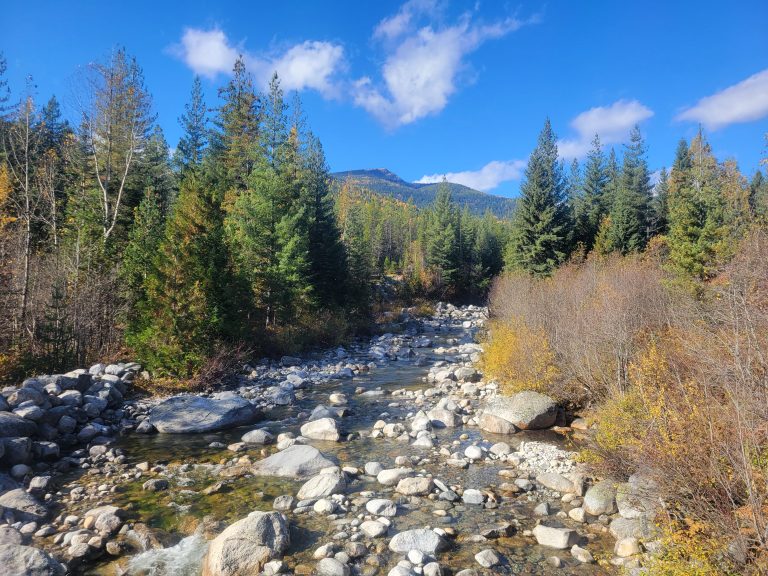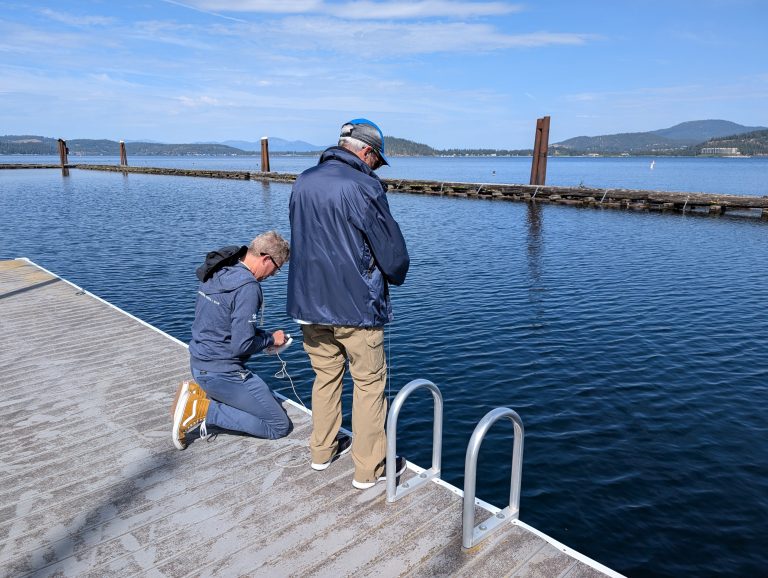
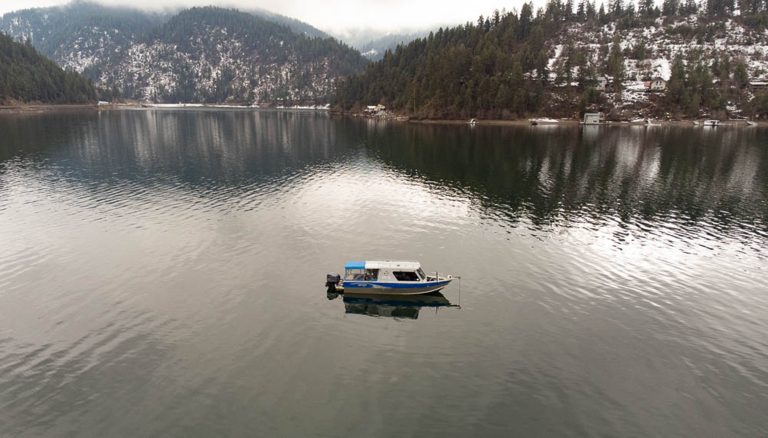
Wolf Lodge sampling, photo provided by Todd Higens, IDEQ.

OUR GEM: Understanding Water Quality Monitoring on Coeur d’Alene Lake

By Meg Wolf, Assistant Director of Idaho Water Resources Research Institute; Craig Cooper, Limnologist with Idaho Department of Environmental Quality; and Dale Chess, Senior Lake Limnologist with the Coeur d’Alene Tribe. Monitoring the health of Coeur d’Alene Lake is a collaborative effort involving multiple organizations, each contributing important pieces to the bigger picture of the lake’s condition. Four key groups — the United States Geologic Survey (USGS), the Idaho Department of Environmental Quality (IDEQ), the Coeur d’Alene Tribe, and volunteers…
IWRRI Grant Recipients Work on Irrigation Efficiency in Southern Idaho

IWRRI Grant Recipients Work on Irrigation Efficiency in Southern Idaho

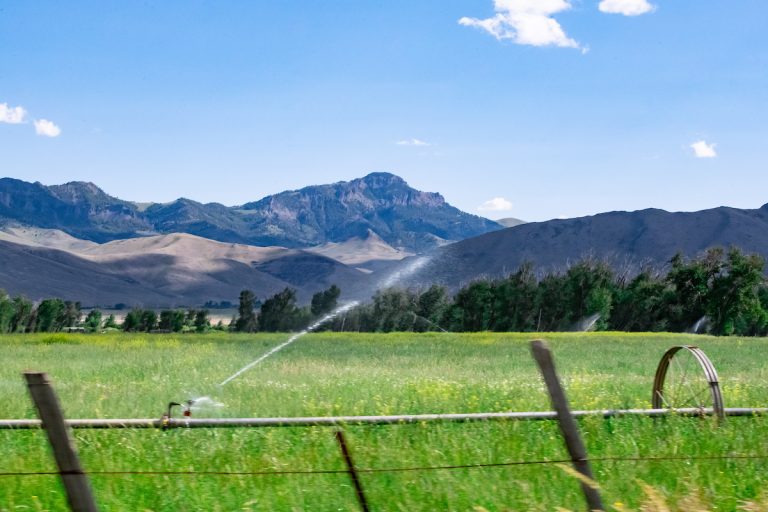
University of Idaho faculty Karen Humes and Russell Qualls, along with their students, analyzed 30 years of crop water use data in southern Idaho to understand variations in irrigation application needs. Their research examined how differences in wet versus dry years and cool versus warm years influence crop water use and irrigation needs. By considering forecasted climate conditions, farmers can make informed decisions about crop selection and irrigation allocation, optimizing water use and improving overall agricultural efficiency.

OUR GEM: What’s Not So Obvious?

OUR GEM: What’s Not So Obvious?

By Dave Muise, Vice President of the Board, Kootenai Environmental Alliance. I was standing by Coeur d’Alene Lake on a fall day taking in the beautiful view when a woman passing by asked me “Has the lake turned over yet?”.  I gave her a vacant look, smiled and said “no”, having no idea what I was saying “no” to.   “Turn over” was what you did to pancakes, and no spatula I’ve ever seen could turn over a lake!  A little…

Pack River 2024

OUR GEM: Understanding TMDLs and Restoring Water Quality in Idaho

Written by Jade Clickenbeard, Watershed Analyst for the Idaho Department of Environmental Quality Water quality is essential for the health of Idaho’s communities, ecosystems, and economies. Unfortunately, many of the region’s rivers, lakes, and streams face water quality issues, often related to pollution from agriculture, urban runoff, and legacy mine waste contamination. In Idaho, the Clean Water Act (CWA) provides a framework for addressing these challenges, and one of the key tools used to restore impaired water bodies is the…

Our Gem: Evaluating Risk in Coeur d’Alene Lake Recreational Areas

Our Gem: Evaluating Risk in Coeur d’Alene Lake Recreational Areas

The Coeur d’Alene River Basin, Coeur d’Alene Lake, and the Spokane River are impacted by heavy metals from historic mining practices that began in the 1880s. This has resulted in the area being designated as an EPA National Priorities List (NPL) Site under the Comprehensive Environmental Response Compensation and Liability Act (CERCLA). The site was listed in 1983 and is known as the Bunker Hill Mining and Metallurgical Complex Superfund Site. Although mining practices have evolved, in tandem with operations…

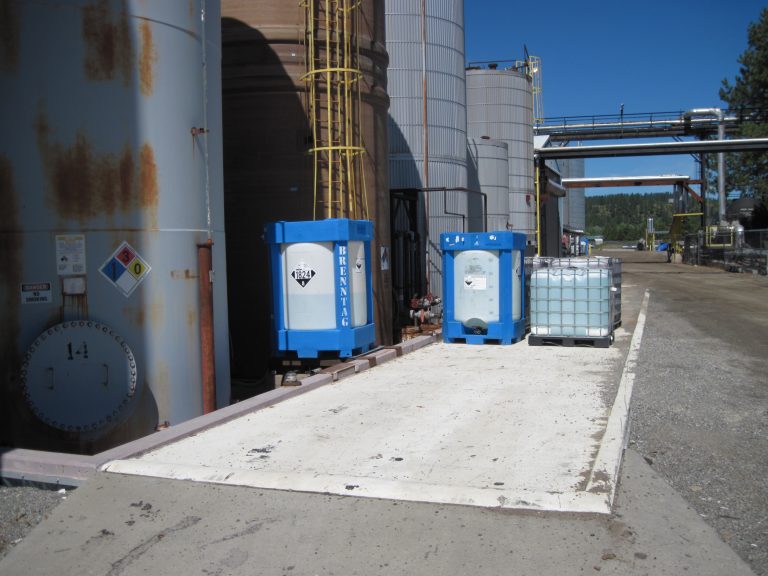
An offload pad sloped to drain any spilled material to the main containment. Photo provided by Panhandle Health.

OUR GEM: The Critical Materials Program Protects our Aquifer

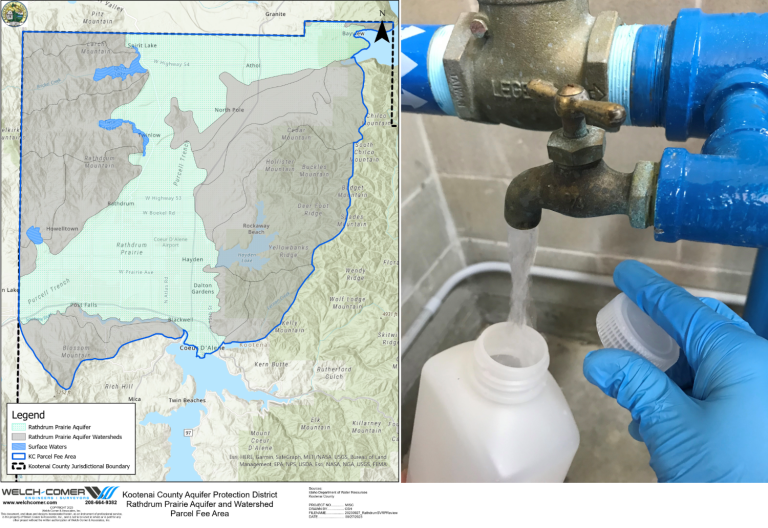
By: Jenny Gray, Panhandle Health Aquifer Protection Program Coordinator North Idaho is home to some breathtakingly beautiful bodies of water. The area’s most important water resource, however, is one we cannot readily see, as it lies beneath our feet – the Spokane Valley – Rathdrum Prairie Aquifer (SVRPA). The SVRPA covers roughly 370 square miles in northern Idaho and eastern Washington and is composed of Ice Age flood-deposited gravels, cobbles, and boulders. It is an unconfined aquifer, meaning no continuous…

OUR GEM: Aquifer Protection District Master Plan

OUR GEM: Aquifer Protection District Master Plan

By: Kootenai County Aquifer Protection District Advisory Board Growth happens. It’s been happening a lot in Kootenai County. In 1970, 35,332 people lived here. By 2022, the population increased to 183,578, and by 2045, some projections indicate that over 319,000 people may live here. A look at the Rathdrum Prairie over the last 20 years shows a steady infill with housing developments, apartment complexes, commercial and other enterprises. The customs, culture, and beauty of our region make it a destination…

OUR GEM: Kootenai Shoshone Soil & Water Conservation District

OUR GEM: Kootenai Shoshone Soil & Water Conservation District

Author: Karla Freeman, District Administrator (KSSWCD) The Kootenai Shoshone Soil & Water Conservation District (KSSWCD) is one of 50 conservation districts in Idaho. We service the Kootenai and Shoshone County areas. The conservation district is made up of 7 voluntary board members and 1 paid district administrator.  We help farmers, ranchers, private landowners, or community partners with soil and water conservation concerns. The KSSWCD is a public service that is a subdivision of the state, and we work directly with…

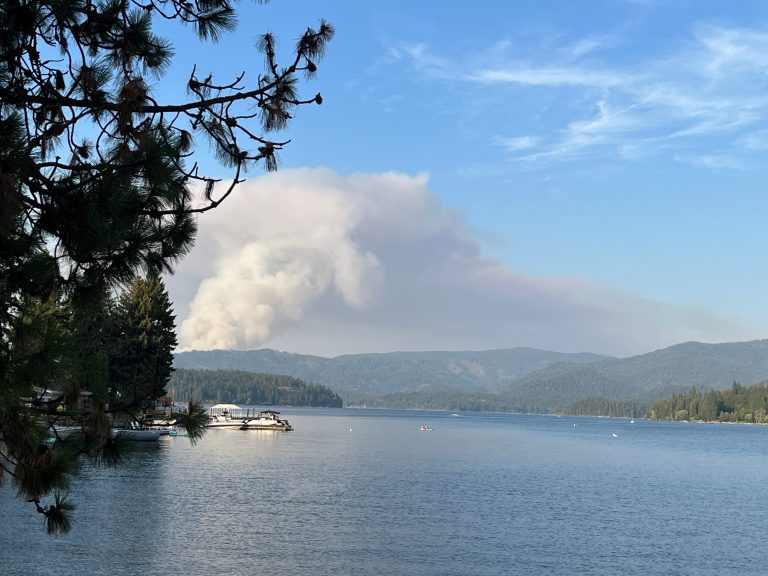
Smoke over Hayden Lake

OUR GEM: Smoke on the Water

Authors Krista Bonfantine, postdoctoral fellow with the University of Idaho Pyroaerobiology Lab along with Leda Kobziar, Ph. D. Professor of Wildland Fire Science & Director, Master of Natural Resources With more than a month of diminished air quality due to wildfire smoke this summer, you may be wondering whether smoke impacts extend beyond what we already know about human health- where does the smoke end up? Does it affect ecosystems like Coeur d’Alene Lake? Much more attention has been given to the…

OUR GEM: Citizen Science and Water Quality: The Role of Bay Watchers in Monitoring Coeur d’Alene Lake

OUR GEM: Citizen Science and Water Quality: The Role of Bay Watchers in Monitoring Coeur d’Alene Lake

Coeur d’Alene Lake faces numerous environmental challenges that require ongoing vigilance. One of the key programs in safeguarding the water quality of this lake is the Bay Watchers program. A collaboration between the Idaho Water Resources Research Institute, The Coeur d’Alene Tribe, Idaho Department of Environmental Quality, and local volunteers.