IWRRI funds strategic Idaho water research projects
BOISE, Idaho — Jan. 08, 2026 — The Idaho Water Resources Research Institute (IWRRI) has prioritized and is backing several research projects involving the state’s three public research universities to address Idaho’s pressing water challenges.
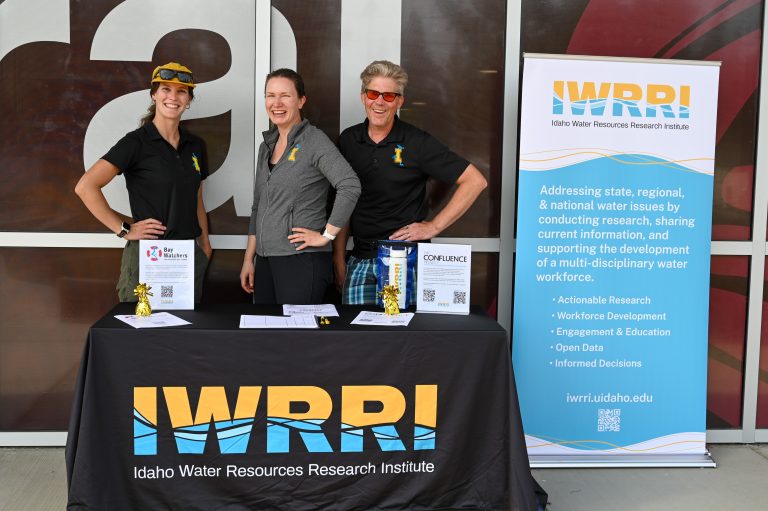
Established in 1964, IWRRI is one of 54 U.S. water research and technology centers, conducting and directing research to support the water resource needs of the state and entire Northwestern U.S.
In fall 2025, IWRRI allocated more than $580,000 for eight faculty-led research projects proposed by scientists with Idaho’s research institutions — University of Idaho, Boise State University and Idaho State University. In addition, state funds will support nine projects led by IWRRI’s staff scientists, covering priority research topics that are critical to the state but are not addressed by faculty proposals.
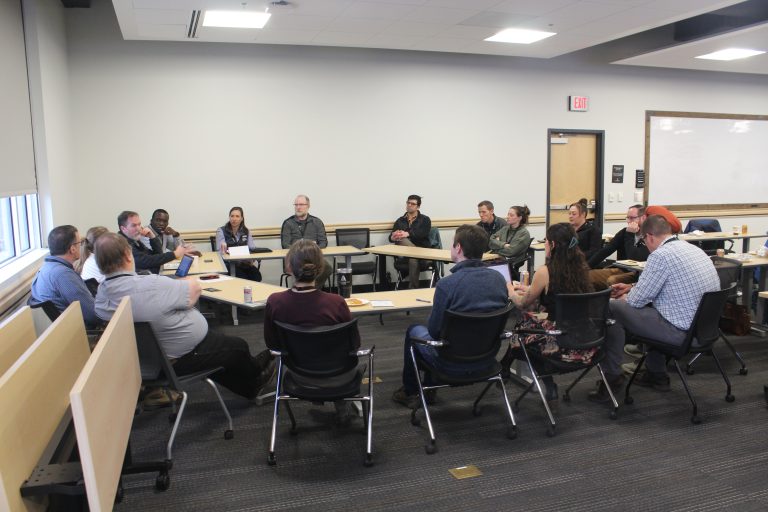
IWRRI’s Research Advisory Committee identified and ranked water research needs across the state, and the Institute’s Executive Board gave final approval.
“Idaho’s water future will be shaped by strong, collaborative science, and this year’s funded projects showcase what our universities and partners can achieve together,” IWRRI Director Kendra Kaiser said. “Researchers across the state are tackling challenges that affect every corner of Idaho, from aquifer recharge and snowpack monitoring to water quality and improved access to water data. By investing in this work, we’re equipping Idaho with the knowledge, tools and partnerships needed to make informed decisions and safeguard our water resources for generations to come.”
One of the projects will involve a team of researchers from U of I, ISU and Boise State, who will work together to review Idaho’s weather and climate monitoring systems and identify gaps, overlaps and opportunities for improvement. The researchers will also recommend ways to strengthen coordination and accessibility of this information for statewide water and natural resource management.
Congratulations to the following faculty-led award recipients:
Water Scarcity:
H.P. Marshall – Boise State University
“Evaluating L-band InSAR for Idaho Water Monitoring Applications”
This project will test if satellites can effectively track changes in snow depth and snow water storage using lidar technology. It will provide an assessment of a new technique of the use of remote sensing for monitoring snow water storage in Idaho’s mountains.
Alejandro Flores – Boise State University
“Enhancing Visualization of Snow Water Storage Conditions”
Researchers will build online tools to visualize how current snowpack levels compare to historical patterns, helping users gauge the likelihood of meeting snow water storage targets across basins.
Meetpal Kukal – University of Idaho
“Understanding Consumptive Use on the East Snake Plane Aquifer: Data Gaps, Uncertainty, and Impacts”
This study will compare multiple datasets for estimating water used by crops and evaluate uncertainties and trends across the aquifer. Results will clarify how factors like crop type and irrigation changes affect water demand.
Technology & Data:
Meetpal Kukal – University of Idaho, Alejandro Flores – Boise State University, Sarah Godsey – Idaho State University, Russell Qualls – University of Idaho, and Lana Cohen – University of Idaho,
“Assessing Sufficiency, Optimal Deployment, and Application-Readiness of Idaho’s Hydrometeorological Observation Network”
The team will review Idaho’s weather and climate monitoring systems to identify gaps, overlaps, and opportunities for improvement. The project will recommend ways to strengthen coordination and accessibility for hydrometrical data and natural resource management statewide.
Water Quality:
Jeffery Langman, Eric Asten, and Tim Link – University of Idaho
“Differentiating Recharge Zones and Primary Flowpaths in the Rathdrum Prairie Aquifer through Traditional and Nontraditional Groundwater Tracers”
Sampling from 40 wells will use naturally occurring age dating tracers to map groundwater recharge and flow paths. This information can be used to improve models used to sustain this key water source.
Angel Monsalve, Emily Bedwell, Gregory Moller, Clifford Swanson, and Casey Bartrem – University of Idaho
“Comprehensive Integration and Evaluation of Idaho Water Quality Monitoring”
This project will evaluate and, where possible, merge Idaho’s water quality databases to identify monitoring gaps and create accessible visual tools for agencies, researchers, and the public.
Water Hazards:
Tao Huang and Bruce Savage – Idaho State University
“Developing Probabilistic Flood Maps for Idaho Under Precipitation Uncertainty Using a Computationally Efficient 2D Hydrodynamic Model”
A new 2D flood model will be used to simulate flood risks under varying precipitation scenarios, producing maps to help communities plan for and reduce flood hazards.
Technology & Innovation:
Andy Tranmer and Daniele Tonina – University of Idaho
“Monitoring Water Seepage Gains and Losses Along Irrigation Canal Systems”
By deploying temperature sensors along canals, this new approach will track where and when seepage occurs, improving water management.
In addition to the faculty awarded projects, IWRRI will lead ten priority projects identified by the Research Advisory Committee.
Water Scarcity:
“East Snake Plain Aquifer (ESPA) Water Budget Gap Analysis” Identifies critical data gaps and uncertainties in existing water budget estimates for the ESPA and evaluates opportunities to improve integrated surface water–groundwater modeling to support long-term aquifer management.
“Analysis of Reach Gains Between Blackfoot and Minidoka” Investigates the recent, unexplained increase in baseflow gains in the Blackfoot–Minidoka reach of the Snake River, a key indicator of ESPA aquifer health, and evaluates mechanisms that could be replicated to accelerate aquifer recovery under the 2024 Mitigation Agreement.
“Integrated Water Budget for the Upper Snake” Develops a fully integrated surface water–groundwater budget for the Upper Snake basin, including consumptive use, river–aquifer exchange, runoff efficiency trends, and projections of future water supply to support conjunctive management.
“Water Supply Analysis Below Swan Falls Dam and Major Tributaries” Assesses historical and future hydrologic variability in the Snake River below Swan Falls Dam and key tributaries (Boise, Payette, and Weiser Rivers) to improve understanding of regional water supply dynamics and availability.
“Pend Oreille Adaptive Lake Management Case Study” Uses Lake Pend Oreille as a test-bed system, this project advances understanding of how operational hydrologic forecasting can be integrated into reservoir management, while improving transparency and public communication around lake operations and decision-making.
Water Scarcity:
“Managed Aquifer Recharge (MAR) and Water Quality” Evaluates water quality risks and benefits associated with managed aquifer recharge, with a focus on nutrients and agricultural contaminants, while also examining social, economic, and environmental tradeoffs that influence MAR site selection and implementation.
“Sentinel-2 Satellite Surface Water Quality Validation” Compares in situ chlorophyll-a measurements with Sentinel-2 satellite-derived products to evaluate the effectiveness of remote sensing for detecting the frequency and duration of harmful algal bloom events in Idaho lakes and reservoirs.
“Sensitive Aquifer Recharge Area (SARA) Toolbox” Integrates geospatial datasets into a decision-support toolbox to identify and prioritize sensitive aquifer recharge areas, supporting groundwater quality protection, recharge enhancement, and informed land-use and water management decisions.
“Recycled Water and Aquifer Recharge” Reviews the state of the science on using treated wastewater for irrigation and managed aquifer recharge, including injection wells, with an emphasis on groundwater quality impacts, regulatory considerations, and knowledge gaps in Idaho.
Technology & Data:
“Integrated Water Data and Visualization” This cross-cutting effort supports all faculty and staff-led research by improving data reproducibility, visualization, and public-facing communication through coordinated research computing, web-based tools, and stakeholder focused data storytelling.
“Working with partners throughout Idaho to identify water research priorities further illustrates how diverse our needs are, from farmers and irrigators to cities, tribes and rural communities,” said Paul Arrington, chair of the IWRRI Executive Board. “Through open conversation and shared problem solving, we can focus research efforts on the questions that matter most on the ground. This ensures available resources support practical and meaningful solutions for all Idaho water users.”
Learn more about our approach to identify Idaho’s water research needs by reading our report.
About the University of Idaho
The University of Idaho, home of the Vandals, is Idaho’s land-grant, national research university. From its residential campus in Moscow, U of I serves the state of Idaho through educational centers in Boise, Coeur d’Alene and Idaho Falls, nine research and Extension centers, plus Extension offices in 42 counties. Home to more than 11,000 students statewide, U of I is a leader in student-centered learning and excels at interdisciplinary research, service to businesses and communities, and in advancing diversity, citizenship and global outreach. U of I competes in the Big Sky Conference. Learn more at www.uidaho.edu.
About IWRRI
The Idaho Water Resources Research Institute (IWRRI) was established in 1964 by the University of Idaho Board of Regents and is one of the nation’s 54 water research and technology centers. IWRRI addresses state, regional, and national water issues by conducting research, sharing current information, and supporting the development of a multi-disciplinary water workforce.
Media contact
Lindsey Beacham
IWRRI Communications Coordinator
208-885-7955
lbeacham@uidaho.edu