The Ultimate Geologic Sponge: Volcanic aquifers and their outsized importance in the future of water in the West
In young volcanic landscapes, thick sequences of basalt flows create groundwater aquifers that store prodigious volumes of water. Drawing on over 30 years of research in the central Oregon Cascades, this talk will explore the hydrogeology, geomorphology, and landscape evolution of young volcanic provinces and their critical importance for provisioning summer streamflow in the western United State. Parallels with the Idaho Snake River Plain will be explored.
For those in Boise, join us in person at the IDWR offices, Room 602 C/D, 322 E Front St, Boise, ID 83702
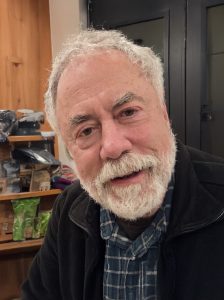
Gordon Grant is a Courtesy Professor in the College of Earth, Ocean, and Atmospheric Sciences at Oregon State University and Emeritus Research Hydrologist with the USDA Forest Service PNW Research Station. His involvement with rivers began as a decade-long career as a whitewater river guide on western US rivers. He received his Ph.D. in fluvial geomorphology from Johns Hopkins University in 1986, and began work for the research branch of the U.S. Forest Service with the overarching goal of advancing understanding of how stream networks, watersheds, and entire landscapes respond to changes in streamflow, sediment transport, and wood entrainment. In particular, this research has focused on fluvial responses due to land use, dams and dam removal, volcanic eruptions, and climate change in the Pacific Northwest and beyond. He is a Fellow of both the American Geophysical Union and the Geological Society of America, and former President of the Earth and Planetary Surface Processes (EPSP) Section of AGU. He is the recipient of the Distinguished Career Award of the Quaternary Geology and Geomorphology Section of GSA, and the G.K. Gilbert Award of the EPSP Section of AGU.
Research group website at wpg.forestry.oregonstate.edu