Zooming in on the Benthic Biolayer: How flow and microbial growth shape riverbed reactions from reaches to pores
A large portion of a river’s microbial and algal life resides in a thin layer of sediments just below the riverbed called the benthic biolayer. This layer is widely believed to contribute disproportionately to whole-stream processes such as aerobic respiration, nutrient cycling, and contaminant transformation. How, when, and how much mass is transformed in the biolayer compared with other reactive locations of the river? I will present two complementary studies that fill knowledge gaps needed to answer this question.
The first study combines controlled field experiments with process-based modeling to quantify transport and aerobic reactions across the water column and the bed of an experimental stream. Our results show that biolayer’s propensity for high mass transformation arises from a distinct combination of rapid solute delivery, transient retention, and rapid biological transformation. These results strongly suggest that the biolayer is a common feature of streams and rivers that should be included in stream-network scale models of reactive transport.
The second study examines the pore-scale mechanisms that may help generate this behavior. I will present recent results from microfluidics experiments that reveal how fluid flow regulates microbial growth and aerobic reactions at the pore scale. Our results further show that microbial communities restructure the organization and connectivity of the porous medium as they actively respond to local physical and chemical conditions, which points to microbial physiology as an underappreciated control on groundwater’s bulk hydraulic conductivity. Together, these studies show how coupled hydrologic and biological processes determine where aerobic reactions occur in shallow river sediments.
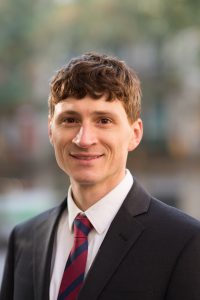
Kevin Roche joined Boise State University in Fall 2020. While his research has spanned disciplines ranging from fluid mechanics to microeconomics, it is unified by a need for improved predictive models that respect the natural variability of hydrologic processes. His work involves a combination of (1) novel observations at scales ranging from the laboratory (mm – m) to the field (m – km); and (2) developing mechanistic models that establish a parsimonious link between these scales. He uses this combined experimental and modeling approach to improve the physical basis of stream- and watershed-scale models of contaminant and nutrient fate.
Prior to Boise State, Dr. Roche was a Fulbright Junior Scholar at the Institute of Environmental Assessment and Water Research (IDAEA-CSIC) in Barcelona, Spain, where he developed theory of reactive transport in rivers. He also worked as a postdoctoral scholar at the University of Notre Dame, where he worked on projects ranging from field experiments in streams to theoretical modeling of climate change and conflict.
Dr. Roche received his B.S. in chemical engineering from Purdue University. After undergraduate studies, Dr. Roche worked as a process control engineer at Eli Lilly and Company (Indianapolis, IN), where he improved automation to increase water efficiency in pilot-scale manufacturing facilities. He then served for three years in the US Peace Corps (Guinea, Costa Rica) before joining Northwestern University for his graduate studies.